Showing posts with label history. Show all posts

Thursday, December 31, 2015

History of New Year's and It's Connection to Nature

In ancient history, the date of the first of the New Year has changed from culture to culture as they each developed their own calendars of the year. Many had to do with astrological events or change in season, which affected their livelihood; the crops. When humans had a solid connection to the Earth they celebrated the bounty which it provided.

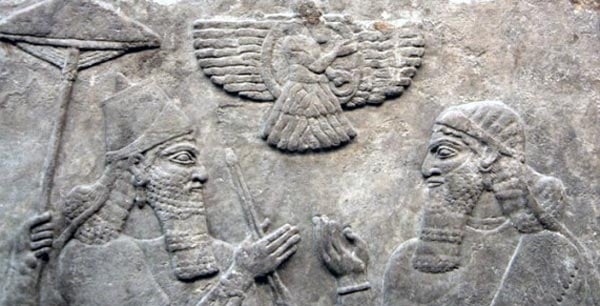
Akitu and New Year's Eve
For some the New Year was celebrated in the springtime. The earliest celebration dates back to 4000 years ago in Babylon with a festival called Akitu, the Sumerian word for Barley, which was cut in the spring. It fell in March during the first full moon after the vernal equinox, which marks the first day of spring.


Around 3000 years ago, the Chinese New Year originated to celebrate the start of the spring planting season. Later it became entwined with folklore and myths. Today, the “Chinese New Year is still based on a lunar calendar that dates back to the second millennium BC, the holiday typically falls in late January or early February on the second new moon after the winter solstice”.

Viking Fire Ball

In Scotland, local traditions based around fire date back to pagan winter celebrations. Fire represents the return of the sun to the land.


In the US, we use the gregorian calendar and celebrate the first of January as the start of the New Year. The Gregorian calendar is a later version of the Roman calendar, with just 10 months, which used to follow lunar cycles. They celebrated the New Year during the vernal equinox in March. This 10 month calendar fell out of sync with the sun and two more months were added. January 1 became the start of the year.


The tradition of setting New Year's resolutions dates back to ancient times as well. Babylonians made promises to their gods to repay debts. Today, we reflect on the past year and think of how to better ourselves in the future. 
Hopefully, many resolve to, in some way, reconnect with our planet Earth, to which we owe our lives.

Source History.com

Friday, July 17, 2015

How Does Your Coffee Grow?

We all love coffee, but do you ever stop to think about where it came from? Do you know how it’s made? Do you know what the coffee plant looks like? Most of us take this delicious treat for granted. There is a large disconnect in our culture between what we consume and where it comes from. I was lucky enough to visit a small coffee farm in Costa Rica in 2012 and learn about the entire process. Below are my photos from that experience.

First, lets start with a little history. It is said that the coffee plant was first discovered by a goat herdsman named Kaldi. He noticed that his goats became excited and full of energy after eating the red berries of the coffee bush. Kaldi tried the berries himself and had a similar reaction from the caffeine in the fruit. The discovery was passed on to monks who then used it to stay awake and alert at night.


Peoples of the Arabian peninsula were the first to cultivate and trade coffee in the fifteenth century. They even had coffee houses where people gathered for social activities. Coffee made its way to Europe by the seventeenth century and to New Amsterdam, now New York, by the mid 1600’s. Tea was still more widely consumed until taxes on it caused the revolt by the Boston Tea Party. Since then, coffee has been our drink of choice. Now, New York is said to consume three times the national average.
Europeans began growing coffee on whomever’s land they could. In some cases, whole industries were started from transporting just one plant. The Dutch began on the island of Java (now Indonesia), then the French in the Caribbean, the Spanish in Central America and the Portuguese in Brasil.  
Now, according to the National Coffee Association, 54% of Americans over 18 drink coffee daily. In 2013 in New York City alone, there were at least 1770 coffee shops. We love our coffee.


Coffee is a huge industry now and like with most mass produced crops, growers are overworked and underpaid. The course I took in Costa Rica was through Community Agroecology Network, which works with small scale farmers to teach them sustainable growing practices and in turn connects them with consumers in the States. They call it  the Alternative Trade Model, which guarantees farmers get higher prices than they would through “Fair Trade”.

Photo by Dana
The coffee plant is a shrub. The coffee bean is the seed of the coffee berry.


Photo by Dana

The coffee fields


Photo by Dana
This is farmer Don Roberto explaining the process of harvesting and processing the coffee. When the berries turn red they are ripe and ready to pick. Don Roberto and his crew wear these baskets attached around their wastes and go into the fields and fill them with the ripe berries. 

Photo by Dana
Found one!

Hand by Dana
The coffee berry is full of antioxidants and is said to have many health benefits. 


Photo by Dana

After the berries are harvested they are set out to dry in the sun. They have to be raked through and turned to prevent them from spoiling. 


Photo by Dana

Once dried, Don Roberto hulls the berries.  

Photo by Dana

This process removes the outer shell around the bean.

Photo by Dana
Roasting the shelled coffee beans!

Photo by Dana
And viola! Coffee. 


Now you know the labor intensive process of what makes your cup of coffee possible. Next time you indulge, consider where your coffee is coming from and how was grown. Try to support small-scale farmers, like Don Roberto, when you can! 


Sources:

Friday, May 15, 2015

Scientist Spotlight: George Washington Carver

Earlier this year, I attended Making Brooklyn Bloom at the Brooklyn Botanical Gardens. I had the pleasure of getting to hear Onika Abraham’s powerful talk. The talk was in the spirit of Sankofa, to memorialize Kristopher Morgan Powell, local Bronx historian who passed away last winter. He was the creator and writer for Bronx River Sankofa. Sankofa is an Akan word used in Ghana that translates to “go back and fetch it”. She explained that this word is from a proverb stating “It is not wrong to go back for that which you have forgotten” which is to represent the importance from learning from the past.


In our first edition of Scientist Spotlight, I'd like to highlight an important scientist from the past whom Ms. Abraham also spoke about in her talk: George Washington Carver.


George Washington Carver 

George Washington Carver was born in 1864 in Missouri. His mother was a slave owned by Susan and Moses Carver. When George was just a baby, his mother was kidnapped by slave raiders. Around this same time that he became an orphan, slavery was abolished with the 13th amendment. The Carver’s raised George and his brother James. As George got older and wanted an education, he had to travel in order to find it because there were no schools for black children where they lived.


He eventually became the first African-American to study at Iowa State Agricultural College in 1891. He combined his love for art and science to study botany. He earned his bachelor’s degree in 1894 and a graduate degree in 1896. His bachelor’s thesis was “Plants as Modified by Man”. His graduate studies included in depth work on plant pathology.
George working in his lab.

Carver excelled in his studies and became the first African-American expert in his field. He was contacted by Booker T. Washington to head the agricultural department at the all-black Tuskegee Institute in Alabama. Here, Carver conducted agricultural research and also conducted “some of his most significant work–seeking solutions to the burden of debt and poverty that enmeshed landless black farmers.” (1) His goal was to fix the relentless cycle of debt and poverty experienced by black farmers dependent upon sharecropping and cotton.


In the effort to create more economically sustainable lives for poor farmers, Carver pioneered a mobile classroom to bring lessons on better farming practices to the farms.
He “gave demonstrations on such topics as using native clays for paints, increasing soil fertility without commercial fertilizers, and growing alternative crops along with the ubiquitous cotton. To enhance the attractiveness of such crops as cow peas, sweet potatoes, and peanuts, Carver developed a variety of uses for each. Peanuts especially appealed to him as an inexpensive source of protein that did not deplete the soil as much as cotton did”. (1)
Mobile Classroom
As he became more widely known, he used his fame to travel through the South to promote racial equality.Carver later became more famous for his work with peanuts and peanut oil, which became widely used in massage for people with medical issues, such as polio. He was thought to ‘have the cure’ and people from all over sought him out.


During the Great Depression and the Dust Bowl, “people from all over the world asked Carver for agricultural advice because he was able to show farmers how to maximize plant production and improve the soil at very little cost”. (2)

George Washington Carver, born into the most unfortunate circumstances, lived a frugal life dedicated to helping improve the lives of others. On his grave was written, He could have added fortune to fame, but caring for neither, he found happiness and honor in being helpful to the world.

In the spirit of Sankofa, I think George Washington Carver represents an important part of the past which we should look back and learn from.


A painting by Betsy Graves Reyneau of Carver cross pollinating flowers.

1- http://www.history.com/topics/black-history/george-washington-carver
More info from : 
http://www.biography.com/people/george-washington-carver-9240299#tuskegee-institute


Wednesday, April 22, 2015

The History of Earth Day


In 1968, Apollo 8 gave the world a photo  of our planet from space, Earthrise. For the first time humanity was able to view their tiny place in space from afar. Seeing our home as a whole allowed people to grasp just how small and fragile the Earth is. It was said to be the most influential environmental photograph ever taken. The following year the United States put a man on the moon. This new perspective of our planet helped generate a push from the public for environmental protection. 

This push led to powerful environmental acts such as the Clean Air Act, the Clean Water Act, and the Endangered Species Act. It also led to the creation of the Environmental Protection Agency and the first Earth Day

People began to realize that it is our ethical duty to protect our environment.


The First Earth Day  

The first Earth day was organized on the 22nd of April 1970 using the collective energy of the time and is seen as beginning of the environmental movement.

This came at a time when industry chugged away polluting our skies, rivers, lakes, and oceans without consequence. Leaded gas was pumped into cars. Oil spills were common and a river caught fire! But it was also a time when young people were taking to the streets to protest the wrong they saw in their country and the world. There was an incredible energy put out by the youth for the Anti-War Movement and the Civil Rights Movement. 
Earth Day founder Gaylord Nelson, then a democratic U.S. Senator from Wisconsin, saw this energy and used it to spread awareness of the environmental issues of the time. 

Denis Hayes, national coordinator, in the Earth Day campaign office (AP)


The first Earth Day was organized as a national "teach in" on the environment. It was a grassroots event that, once the plan was announced in the fall of 1969, spread through college campuses all over America. 

"On the 22nd of April, 20 million Americans took to the streets, parks, and auditoriums to demonstrate for a healthy, sustainable environment in massive coast-to-coast rallies. Thousands of colleges and universities organized protests against the deterioration of the environment. Groups that had been fighting against oil spills, polluting factories and power plants, raw sewage, toxic dumps, pesticides, freeways, the loss of wilderness, and the extinction of wildlife suddenly realized they shared common values." EarthDay.org


In New York City, a portion of fifth avenue was shut down and a rally was held in Union Square.
Children sweep Union Square on Earth Day 1970.


A major shift in shared perception occurred in the late sixties and seventies. Young people revolted against the conservative social norms at the time and demanded change. From this came the Civil Rights Movement, the Anti-War Movement and the Environmental Movement. 

Today, more than ever, a major shift needs to occur again! Climate change is the most pressing issue of our time and we all need to do our part. Join an Earth Day event and see how you can help, not only on this special day but everyday.


Earth Day events this year in New York City:

Wednesday, Earth Day 22 April 2015

TEDC Earth Day Celebration - Earth Matters: Designing our Future, John L. Tishman Auditorium, University Center
10:00 am to 8:00 pm (FREE)

7:00 PM to 9:00 PM (FREE)

(Come visit me, Dana, at the Hort stand. We will be making seed bombs!)

Earth Day Craft & Mini Garden Tour - Queen's Botanical Garden
3:30 p.m.–5:00 p.m. (FREE w admission)

Hattie Carthan Herban Farm: Earth Day Celebration- Bed-stuy
11:00 a.m.–6:00 p.m. (FREE)


April 24-26, 2015
Green Festival Expo, Javits Convention Center


Future GrowNYC Stop'N'Swap - Community Reuse events
     Thursday, April 23 - Brooklyn
     12pm-3pm, Brooklyn Borough Hall

     Saturday, April 25 - Bronx
     12pm-3pm, Westchester Square

     Sunday, April 26 - Queens
     11am-2pm, Central Queens Y


Saturday, 2 May
Earth Day Rockaway, Rockaway Beach
12:00 p.m.–4:00 p.m. (FREE)