Happy Earth Day, Earthlings!

This is the 46th year of celebrating Earth Day. 46 years ago people started to realize how our way of living was harming our environment. This was at a time when industry chugged away polluting our skies, rivers, lakes, and oceans without consequence. Leaded gas was pumped into cars. Oil spills were common and a river even caught fire! But it was also a time when young people were taking to the streets to protest the wrong they saw in their country and the world. There was an incredible energy put out by the youth for the Anti-War Movement and the Civil Rights Movement. Earth Day founder, Gaylord Nelson, then a democratic U.S. Senator from Wisconsin, saw this energy and used it to spread awareness of the environmental issues of the time.
The similarities of that time and now are frightening. But again, people are taking to the streets to protest war, fight for civil rights and environmental justice. The environmental movement got us the Clean Water Act, and the Clean Air Act. That was great but so much more needs to be done. Now climate change is a huge threat to our planet and us. It is the most pressing issue of our time and we all need to do our part. Here are some things we can do today and always:

Reduce, Reuse, Recycle
When you throw your trash "away", it does not disappear. It goes to a landfill where it decomposes sending methane, carbon dioxide and toxins into our air, soil and water. Reducing waste is the best way to fight this. Using reusable bags, travel mugs, and water bottles cuts out plastic and paper waste that would sit in a landfill. Recycling that waste is the next best option. Find out what you can and can't recycle in NY.
Compost
Composting is a form of recycling but for food scraps and plant waste. It's a biological process in which natural microorganisms break down organic matter. Check out our blog about composting! If you don't have space for a composter, there are locations around the city where you can take your organic waste. Check out GrowNYC to see where you can bring your compost waste.

Buy Local & Eat Seasonally
Buying locally grown food cuts down on carbon emissions needed to transport produce. Instead of strawberries in the winter, when they'd have to be shipped in from another part of the world, eat local strawberries when they are in season. They taste better when they're fresh and they have more nutritional value when eaten closer to the date they were picked. Living in NY, we have an endless amount of farmers markets throughout the city and many stores that partner with local farms. Many think that organic local produce is unaffordable, so many markets have worked with the city to be able to accept EBT/food stamps. Check out this map to find the closest market to you and what days they're open.
 |
| Myrtle Avenue |
Join a Community Garden
Many of us in the city don't have space for our own gardens. So many have come together as a community to make our neighborhoods and environment better. There are community gardens in almost every neighborhood. Community gardens are not only a place to grow food and plants but also a place to meet your neighbors and a platform for the community to share ideas for bettering our surroundings. Ever wanted to have a neighborhood cleanup? A community garden would be full of people interested in helping in that type of thing. Anyone can join, just reach out. Find the your closest garden here.
Join an Environmental Group
Earth day is everyday.. because we live here. It needs our help more than just one day a year. If you want to get more involved find a group near you that is doing good things, and join! Here's a list to get you started.
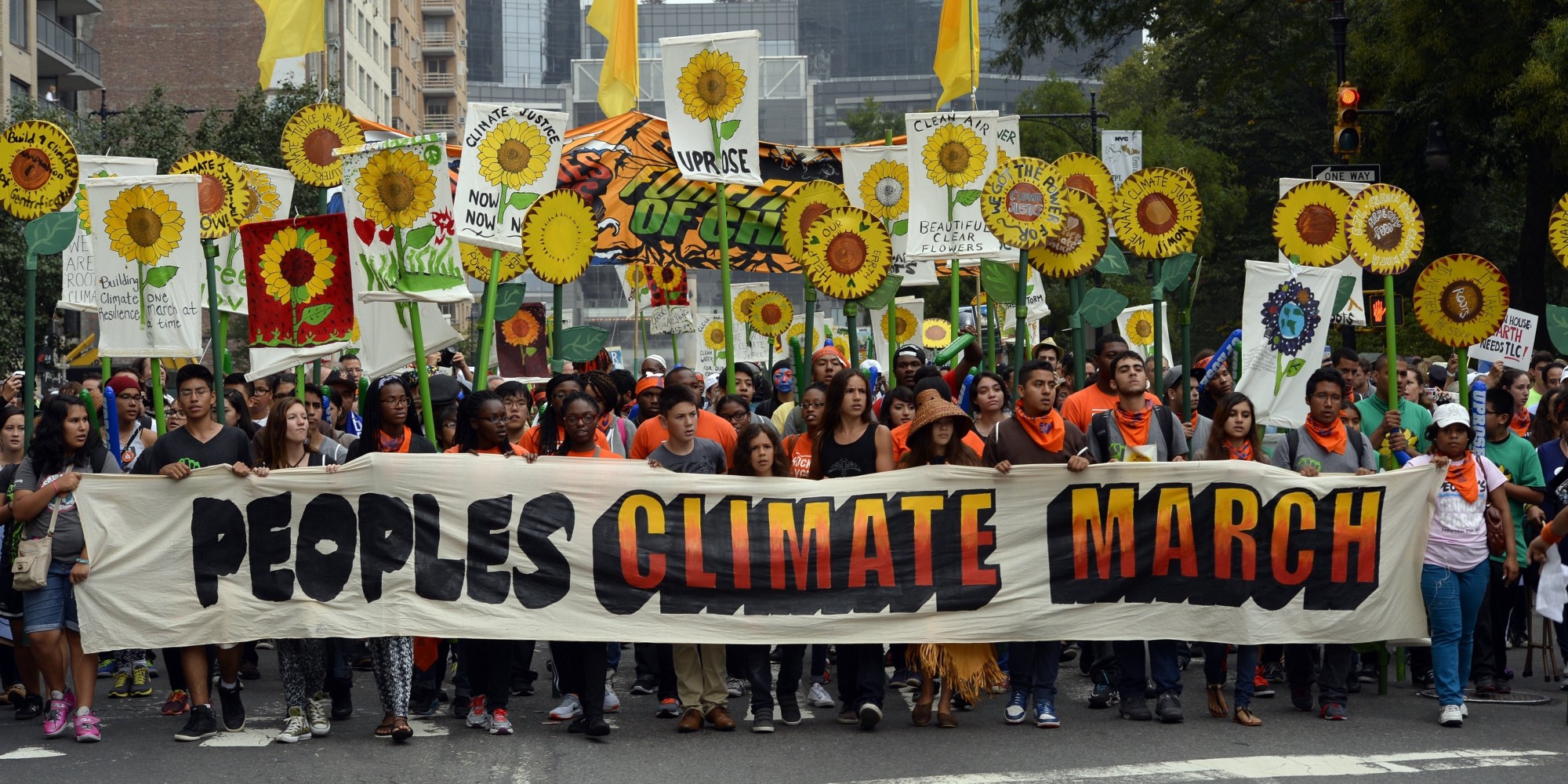 |
| Hundreds Of Thousands Turn Out For People's Climate March In New York City |
Demand Change in Environmental Policy
We all can do our own little part do help but there needs to be big changes made from the top. Our leaders need to feel pressure from the people that elect them. EPA regulations need to be strong and be enforced. Our energy sources need to become renewable and we need to get off of fossil fuels. We can't keep allowing corporations to ruin our environment for short term gains. In the long term, we will all lose. So VOTE! Sign petitions. Get out in the street and protest. Demand that changes be made. Do it for the kids.
 |
| Today is Car Free Day NYC! |
And hey, have fun! Yes, climate change is serious but helping the environment doesn't have to be. Go plant a tree with some friends! Go have fun with other New Yorkers and get talking about how we can all help! You can check out some Earth Day events around New York here.


