Showing posts with label spring. Show all posts

Friday, March 11, 2016

Spring Garden Checklist


I don't know about you but I'm buzzing like a bee about this weather. Temps in the 70s in early March?? Yes, please. Fingers crossed that it's here to stay. We really didn't think we would be out in the garden this soon! Our team already got to go out and start sprucing up some gardens this week. You can start waking up your gardens too! If you’d like some help e-mail us to schedule an early-season maintenance visit. Additionally, Staghorn also offers annual maintenance contracts that are tailored specifically to the needs of each garden. Contact us if you're interested in getting a quote.


Spring Garden Checklist

If you’d like to start waking up the garden yourself, there are some key things that should get done. Here is a quick checklist to get you going!
Turn Irrigation Systems Back On
Once the overnight temperatures are consistently well above freezing and daytime temperatures are consistently above 60 degrees, you can turn your irrigation systems back on. Now is a good time to check for any winter damage that may have occurred. Check to make sure water is coming out everywhere it should be.

Cut Back Ornamental Grasses and Perennials
You should cut back ornamental grasses and perennials to the ground or a few inches above. This should be done in late winter/early spring (now), before new growth begins.

Prune Trees and Shrubs
Spring-flowering trees and shrubs should be pruned in late spring after they flower. Summer-flowering trees and shrubs should be pruned in the winter or early spring just before they push out their new growth. Evergreens are best pruned in the early spring as well just before their growth spurt.

Fertilize
Most trees experience a burst of growth in the spring and then slower growth throughout the summer. It’s good to fertilize as this growth is about to occur. This can be done as soon as the ground is workable and into May. We recommend an organic brand such as Espoma or Dr.Earth.

Assess Winter Damage
As we start to see things coming back, we can assess winter damage that may have occurred. Maybe a few branches of a plant have died or have been broken from wind or the weight of snow. These branches should be pruned off below the damage, to the next set of healthy branches. Generally new growth will occur frm this area to replace the broken section.
 
If you'd like help in caring for your garden this year contact us about setting up a maintenance contract for the coming season. We would love to help you keep your garden looking it’s best all year.

Happy spring everyone!

Friday, March 4, 2016

Spring Houseplant Care

House plants, potted plants, succulents, ferns, fig trees, and green things in pots. Indoor gardening and botanical design.:
Spring is the active growing season for your plants. Here are a few key things you can do to keep your plants happy and healthy this spring.


Watering
As the the hours of daylight and temperature increases so should watering. Don’t go crazy with it. Overwatering is the easiest way to kill your plants. Gradually increase watering and keep an eye on your plants. If the pots are soggy for a couple days, water less. If the plant is wilting, water more. If your plants are drying out too fast you could add some rocks of pebbles to the top of the soil to help prevent evaporation. Also, terracotta pots dry out quickly so keep that in mind.

This does not apply to cacti and succulents. They need to dry out between waterings.

Maintenance
Plants benefit from spring cleaning as well!
Prune away dead/dying stems or leaves. This stimulates growth and helps prevent disease and insects that are attracted to dead plant material. (Always make sure to monitor plants for pest, especially spider mites! They are hard to get rid of once they are many)
Plants may have becomes leggy over the winter. Pruning away this weak growth will promote fuller growth.
It’s also good to dust the leaves of your houseplants. They gather dust just like our shelves. The dust can block the plants pores preventing photosynthesis.

Sunlight
The amount of hours of daylight will increase and become more intense with the season. Most houseplants thrive in indirect sunlight, as extended periods of direct sun can cause leaf burn. Consider moving plants depending on their needs. Remember plants can become shocked when moving from dark to bright or vice versa so do moves gradually. If your plants are reaching, you can rotate the pot occasionally to get even growth.

Again, cacti & succulents like direct light and heat so this does not apply to them.

Temperature
As it heats up many of us will switch on the air conditioner. Your plants will not like being blown with cold air in the spring/summer. It’s best to move them away from your AC unit.
Your plants will benefit from an open window. Some fresh air and humidity will do them good.

Moving outside
Some tropical plants can be moved outside if you have space as temperature rise (should be steadily above 50F).
If moving your plants outside, do so gradually. The plants will be shocked going directly into bright sunlight. Move them into shady area first.
Make sure they are protected from wind or they may break. Pots should also have drainage holes so they don’t flood when it rains.

Re-potting
Spring is the best time for re-potting plants. This can mean re-potting the plant with new soil into the same pot or giving it a larger one to grow into if it has become cramped in its current pot. There is a nice guide to re-potting plants here.


Your plants will really appreciate the love and care. Kick off their growing season right this spring!

Friday, October 23, 2015

It’s Time To Plant Some Bulbs


Winter can seem like it lasts forever(and it hasn't even started yet). When those spring bulbs start to pop up, it gives us hope that winter is almost over. Now is the time to get those bulbs in the ground so we can enjoy them in the spring. Different bulbs bloom at different times ranging from as early as February and going through June. It’s nice to have a variety so you have bulbs popping up all season.

Some nice varieties to choose from:

Early Bloomers

Crocus chrysanthus, Snow Crocus

Galanthus, Snowdrop

Mid-Season

Daffodils
Narcissus Fidelity
There are so many types of daffodils and tulips. Some varieties bloom early such as, Narcissus 'Tahiti', some mid-season such as Narcissus Fidelity, and some are late bloomers such as Narcissus bulbocodium 'Golden Bells'.

Tulips
Tulip 'Veronique Sanson'
Tulips also have a range of bloom times depending on the variety.

Late Season

Lilium asiatic 'Elodie', Lilies

Allium 'Globemaster', Alliums
I wish these were everywhere I went.


Planting

When choosing your bulb layout, keep in mind the bloom times, colors, and heights. If you have different types blooming at the same time, you don’t want the shorter ones to be hidden.

Most bulbs prefer an area of full sun.

The rule of thumb for planting depth is digging a hole 3x the height of the bulbs. You can layer your bulbs depending on their size and bloom times as well.

Add soil amendment and cover bulbs. You may want to plant annuals over bulbs for extra frost protection.

Friday, May 8, 2015

15 Flowers You Can Eat


Spring is so beautiful. There are flowers everywhere we look. 

Did you know you can actually eat many flowers?
Here is a list of 15 beautiful flowers that would make a great addition to your delicious dishes.


Calendula / marigold
The petals of these flowers are edible and have a peppery, spicy taste.  They add vibrant color to any dish.


Borage
These are lovely blue-purple flowers that have a mild taste like cucumber.


Anise hyssop
Flowers and leaves of this plant are edible and have a subtle licorice flavor.


Allium
The allium family includes plants such as garlic, chives and leeks. All the blossoms from this family are flavorful and edible.


Chrysanthemum
Mums come in a wide range of colors and flavors, mostly a peppery flavor. Only the petals of these flowers should be eaten.


Cilantro
Cilantro flowers share the same flavor as the leaves and are best eaten fresh, not cooked.


Citrus (orange, lemon, lime, grapefruit, kumquat)
Citrus flowers are very sweet and have a lovely but strong scent. They should be used sparingly to jazz up a dish.


Fennel
The beautiful bursting yellow fennel flowers have a subtle licorice flavor similar to the leaves.


The delicious hibiscus doughnuts from Dough!
Hibiscus
Hibiscus flowers are used throughout tropical regions mostly as a tea. The flower has a tart cranberry flavor.


Johnny Jump-Up
These flowers are cute and delicious. They have a subtle mint flavor and are a great addition to many dishes.

Lavender ice cream- yum!
Lavender
Lavender flowers, as the leaves, have a lovely sweet, spicy taste. They have a calming scent and can be used in sweet or savory dishes.


Mint
Mint flowers are minty! Add pretty fresh taste to any treat.


Nasturtium
These flowers are bright and are brilliant in a dish. They are very flavorful with a spicy pepper taste.


Pansy
The petals of the pansy have a very subtle taste but the whole flower can be eaten for a bit more flavor. The colorful flowers make a great edible decoration for many treats or salads.


Squash and pumpkin
Squash blossoms have a mild squash flavor and are great for stuffing.


Before you go snipping flowers all over town..

It is best to eat only flowers of plants that you have grown. Flowers from a florist or found elsewhere may have been treated with pesticides, which you do not want to be eating.

Before eating flowers, the plant should be checked for signs of disease or insect damage. Flowers from these plants should not be eaten.

The pistil and stamen, the male and female parts in the center of the flowers, should be removed before eating.

Clean flowers with warm water and then dip in ice water the restore crispness.

Check out some great edible flower recipes here!

Warning- Not all flowers are edible and some flowers are poisonous! Some plants with edible flowers may have other poisonous parts and vice versa. Always research before eating! 
For a list of more edible flowers and some that are toxic check out this site.


Friday, April 24, 2015

What's Blooming Now- Mid Spring Edition


Happy spring, everyone! Last weekend was oh so lovely. Hopefully the warm weather picks up again soon and we can all get out and enjoy the sunshine. 
Our plant friends are finally all waking up and bursting into action.

This is our first installment of 'What's Blooming Now'. I've gotten to wander around our lovely city and here are some of the beautiful plants I've caught blooming into action! 


Cherry Tree, Prunus spp. - Kensington, Brooklyn


Forsythia, Forsythia x intermedia - Windsor Terrace, Brooklyn


Hellebores, helleborus spp. - Prospect Heights Community Farm, Brooklyn


Saucer Magnolia Tree, Magnolia × soulangeana - Park Slope, Brooklyn


Tulips and Daffodils, Tulipa spp. and Narcissus spp. - Bryant Park, Manhattan


Weeping Cherry Tree, Prunus subhirtella - Park Slope, Brooklyn


Star Magnolia, Magnolia stellata - Prospect Heights, Brooklyn


These are some of the awesome plants in action right now. 
A few that are also in bloom right now that I didn't catch are:

Crocus, Crocus spp.

Flowering Pear Tree, Pyrus calleryana
Hawthorn, Crataegus spp.
Pansy, Viola spp.
Witchhazel, Hamamelis virginiana


Keep your eyes peeled for some Redbuds, Cercis canadensis  and Flowering Dogwoods, Cornus florida. They will be bursting into action soon along with many more!

Get outside and enjoy those beautiful flowers while they are here! Soon enough leaves! glorious leaves! will be back. (:

Monday, February 23, 2015

5 Signs of Spring - A Nature Guide to Recognizing the Light at the End of the Tunnel (of Winter)

It's late February. Your SAD symptoms are raging. We're technically less than a month away from the first day of spring, but today's high is a disagreeable 25 degrees and you're bookmarking another new recipe for gluten-free chocolate chip cookies. We know the warmth will arrive eventually, but how much more can we take? And more importantly, how can we spot the first signs of spring? Behold! Here are 5 fail-proof signs of spring to help you spot the light at the end of the tunnel that is winter.

1. Serviceberry's (Amelanchier canadensis/alnifolia) Are Blooming
Not only are they a harbinger of spring, but these beauties look great all year long (excellent fall color). Want to know why they're called Serviceberry? The blooms on this small native tree used to signal that the ground had thawed enough for graves to be dug and thus, funeral services could be held for the folks who died over the winter. Yay, cemetery lore!


2. Buds Emerging on the Eastern Red Bud Tree (Cercis canadensis)
Another delightful small native tree, the aptly named Red Bud forgoes subtlety and goes all out in early spring with an explosion of tiny hot pink blooms. They should be easy to spot not only because of their brightness, but because all the other trees they hang out with will likely still be bare-branched.


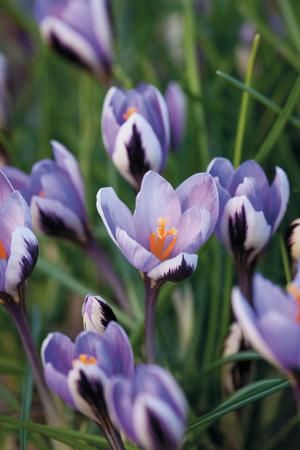
3. Crocuses (Crocus sp.)
These cute little guys are often the first flowers to pop out of the ground in late winter/early spring - sometimes even when a little snow is still on the ground. Fun fact: Ever wonder what deal is with saffron? Or where it comes from? Crocuses, my friends. The fancy-pants spice is actually obtained from the stigmas of the autumn-blooming Crocus sativus.


4. Spicebush Blooms (Lindera benzoin)
While not particularly common in most city gardens, the native spicebush is easy to spot in wilds of Central Park and Prospect Park. Small, understated yellow flowers emerge before leaves and smell awesome. Later in the summer, these shrubs play host to one of the wackiest caterpillars/butterflies, the Spicebush Swallowtail- check out those (fake) crazy eyes.


5. Winter Aconite (Eranthis hyemalis)
You're going to want to call these buttercups, but you shouldn't because they technically aren't. These super low-growing plants have bright yellow flowers that often emerge even before the crocuses do (or at least at the same time). Despite their common name, they aren't actually part of the highly toxic aconite family (e.g., wolf's bane), so leave them out of any poisons you're planning on brewing up.