Showing posts with label spring bulbs. Show all posts

Friday, October 23, 2015

It’s Time To Plant Some Bulbs


Winter can seem like it lasts forever(and it hasn't even started yet). When those spring bulbs start to pop up, it gives us hope that winter is almost over. Now is the time to get those bulbs in the ground so we can enjoy them in the spring. Different bulbs bloom at different times ranging from as early as February and going through June. It’s nice to have a variety so you have bulbs popping up all season.

Some nice varieties to choose from:

Early Bloomers
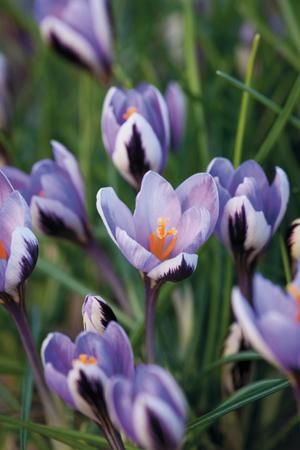
Crocus chrysanthus, Snow Crocus

Galanthus, Snowdrop

Mid-Season

Daffodils
Narcissus Fidelity
There are so many types of daffodils and tulips. Some varieties bloom early such as, Narcissus 'Tahiti', some mid-season such as Narcissus Fidelity, and some are late bloomers such as Narcissus bulbocodium 'Golden Bells'.

Tulips
Tulip 'Veronique Sanson'
Tulips also have a range of bloom times depending on the variety.

Late Season

Lilium asiatic 'Elodie', Lilies

Allium 'Globemaster', Alliums
I wish these were everywhere I went.


Planting

When choosing your bulb layout, keep in mind the bloom times, colors, and heights. If you have different types blooming at the same time, you don’t want the shorter ones to be hidden.

Most bulbs prefer an area of full sun.

The rule of thumb for planting depth is digging a hole 3x the height of the bulbs. You can layer your bulbs depending on their size and bloom times as well.

Add soil amendment and cover bulbs. You may want to plant annuals over bulbs for extra frost protection.

Monday, February 23, 2015

5 Signs of Spring - A Nature Guide to Recognizing the Light at the End of the Tunnel (of Winter)

It's late February. Your SAD symptoms are raging. We're technically less than a month away from the first day of spring, but today's high is a disagreeable 25 degrees and you're bookmarking another new recipe for gluten-free chocolate chip cookies. We know the warmth will arrive eventually, but how much more can we take? And more importantly, how can we spot the first signs of spring? Behold! Here are 5 fail-proof signs of spring to help you spot the light at the end of the tunnel that is winter.

1. Serviceberry's (Amelanchier canadensis/alnifolia) Are Blooming
Not only are they a harbinger of spring, but these beauties look great all year long (excellent fall color). Want to know why they're called Serviceberry? The blooms on this small native tree used to signal that the ground had thawed enough for graves to be dug and thus, funeral services could be held for the folks who died over the winter. Yay, cemetery lore!


2. Buds Emerging on the Eastern Red Bud Tree (Cercis canadensis)
Another delightful small native tree, the aptly named Red Bud forgoes subtlety and goes all out in early spring with an explosion of tiny hot pink blooms. They should be easy to spot not only because of their brightness, but because all the other trees they hang out with will likely still be bare-branched.


3. Crocuses (Crocus sp.)
These cute little guys are often the first flowers to pop out of the ground in late winter/early spring - sometimes even when a little snow is still on the ground. Fun fact: Ever wonder what deal is with saffron? Or where it comes from? Crocuses, my friends. The fancy-pants spice is actually obtained from the stigmas of the autumn-blooming Crocus sativus.


4. Spicebush Blooms (Lindera benzoin)
While not particularly common in most city gardens, the native spicebush is easy to spot in wilds of Central Park and Prospect Park. Small, understated yellow flowers emerge before leaves and smell awesome. Later in the summer, these shrubs play host to one of the wackiest caterpillars/butterflies, the Spicebush Swallowtail- check out those (fake) crazy eyes.


5. Winter Aconite (Eranthis hyemalis)
You're going to want to call these buttercups, but you shouldn't because they technically aren't. These super low-growing plants have bright yellow flowers that often emerge even before the crocuses do (or at least at the same time). Despite their common name, they aren't actually part of the highly toxic aconite family (e.g., wolf's bane), so leave them out of any poisons you're planning on brewing up.