Friday, January 29, 2016

Our Favorite NYC Nurseries

We have selected some of our favorite stores for plants and garden-related items in NYC and Brooklyn. This is not a list of all available options, but these are our go-to’s, and they’re retail, not wholesale so you non-industry folks can get all your goodies there too.

In no particular order:

Gowanus Nursery

A well-stocked oasis located way out in the weird nether-scape that is the “Columbia Street Waterfront District” and “Redhook”. A nicely edited selection of annuals, herbs & veggies, perennials, some trees and shrubs and more recently small indoor/tropical. Lot’s of native plants (*boner*) from Glover Perennials (*big boner*). Very knowledgeable staff, beautifully curated.
We always leave Gowanus with Baby Coop at full capacity.
Conveniently located on Metropolitan Avenue in Williamsburg (between Union and Lorimer) it’s close to the BQE for us drivers and the G/L trains for subway-taking folks. Crest has everything. Nice selection of classic standby annuals, lots of herbs, veggies and fruits, perennials (more native Glovers!), trees and shrubs. A good mix of “traditional” and “awesome, native, rarely used” plants, and a big selection of indoor/tropical plants of all sizes. Soils, composts, mulch, plant vitamins, tools, etc. Good prices - they have excellent plant sales throughout the year. A beautiful, sweater-wearing pig named Franklin. And a super helpful, awesome Garden Center Manager named Kristen - she is the best! They have a bathroom, and you can use it.

Sprout Home Brooklyn

Sprout has two super cute neighboring shops located at the very end of Grand St. in Williamsburg. Nice choice of indoor plants of all sizes - especially nice “specimen” plants like rare orchids, carnivorous plants, etc. Nifty ideas for gifts and lovely green interior decorating-y stuff. Excellent selection of planters for indoors and out, plant vitamins and some soils, etc. A smaller selection of outdoor plants, but they usually have some good Glover native perennials and cool, small trees. There are usually a couple of folks with superior plant/garden knowledge working there. Anna is particularly great. A tad on the pricey side, but good quality. They offer cool workshops and classes too!

Kings County Nursery

A mighty big nursery for the city confines. They’re a bit out of the way over in East Flatbush, but the prices are good and the selection nice and traditional. If you need a good o’l echinacea or inkberry, you can probably find it here. They have a great selection of traditional fruit trees. Old school - old men, very nice, good prices.


The Sill is a super cute shop in the Lower East Side. They are great for gifts. They sell locally made planters, easy- care houseplants, and Brooklyn blend soil. The owner Eliza is a brilliant, smart, hot lady. They do bi-monthly workshops and you should check them out!

Friday, January 22, 2016

Snow Outside NYC!

Jon Snow knows everything

Sike! It’s here! And this weekend we get our first big snow storm. They’re calling it a “blizzard”.. but to me a blizzard is like 3ft of snow, not 7-12inches. But sure, we are getting a “blizzard’ and it’s pretty exciting.

New York is beautiful in the snow. 
(You know, at first, before it’s covered in soot, trash and dog poop. But let’s not think about that right now.)

For a little while, our awesome city will be covered in a beautiful blanket of magic. 
We should all try to get out and enjoy it, even if just for a moment. 
I know we don’t have to go outside and we can just watch movies and drink hot toddies all weekend (and that’s awesome!) but that’ll make most of us pretty stir crazy at some point. So, bundle up and walk outside.


Personally, I like the night-time snow walks. 
Maybe because our brains are used to seeing a dark ground and a bright sky and snowy nights are the opposite, so it creates some magical beauty explosion in our brains? Or maybe it's just really beautiful. 
The street lights making the snow all bright oooo so nice.


ooo Brooklyn Botanical Garden in the snow <3


Dog walks! <3 
(Please, please pick up after your dogs, people!)

Getty images
This is a snowball fight from 1938!


Classic snowy Central Park photo <3


Look even this picture I took last winter of a hole in the ground looks pretty covered in snow. 


Everyone should try to get out there and enjoy it while it's fresh and beautiful. But be safe! And bundle up! And probably don't drive and all.. 
We'd love to see your snow photos! Feel free to share in the comments (:

Enjoy the snow storm nyc <3

Friday, January 15, 2016

Irrigation Systems

This week part of the Staghorn team, Colin and I, had the thrilling experience of attending a course at the New York Botanical Gardens about irrigation systems. Irrigation systems are a great idea if you have a landscaped property and you want to keep it looking nice while also conserving water. This is a little guide to some of your options for irrigation.


Underground Sprinkler Systems
This system is best installed before landscaping is done. Parts of the landscape will need to be dug up and replanted if not. Your plants will need to be organized into hydrozones; plants with similar water needs should be grouped together. Each zone will be on it’s own timer and have different sprayer heads that fit to that hydrozone’s needs.

An example of different hydrozone areas
Pros
  • Good for large spaces and lawns
  • Very far spray range
  • Pop up sprayer heads are available so they can be out of sight when not in use
Cons
  • High water usage
  • Sprayer heads are easily broken by foot traffic, vandalism or mowers
  • Water loss from overspray and evapotranspiration
  • Can only be on certain hours or plants can become scorched
  • Needs higher water pressure


Drip Irrigation
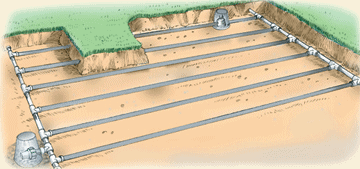
This system involves laying tubing throughout or under the planting area. The tubing has drip holes which allows water to slowly seep out into the ground around the plants. If the tubing is underground, trenches are dug and the piping is laid in a grid, covered and then planted. If it is above ground, the piping can be laid around the planted area and then covered with mulch.

Drip layout under sod
Pros
  • Can be fit into any shape or size area
  • Can be installed underground or above
  • Can be added to old sprinkler systems
    • There are adapters available to turn sprayer heads into dripline connectors
  • Great for water conservation
    • Uses far less water than sprinkler systems
  • Easy to find and fix damaged tubing
  • Works with low water pressure
  • Water goes directly where you need it
    • It is not wasted through evaporation, wind, or surface run off
Cons
  • It may be hard to see that the ground is getting wet
    • Since the piping is underground or under mulch, the surface may look dry even though it’s damp below

Microdrip lines off of larger tubing
MicroDrip Irrigation

Microdrip is great for small gardens, rooftops, balconies, container gardens, or being very specific for a certain plant’s watering needs. It uses smaller tubing than normal drip irrigation. This allows you to plug into the larger drip tubes anywhere along the tube and feed water directly where you want it to go. Emitters are added to the ends which allow you to choose specific water flow to each plant.


Friday, January 8, 2016

Before and After: Cobble Hill Backyard

This backyard project was our last major install of 2015. We had to do a huge removal of the existing jungle of invasive vines, weeds and other debris. We uncovered things we didn't know existed going into it, including a huge rock wall along the back of the yard. We turned our find into something awesome by building a custom cedar planter on top. 
There was an existing patio area which was cleared, dug up, and redone. A sod lawn was added to the center area for a play area. We reused as much of the existing bluestone material and healthy perennials and shrubs as we could. Many new perennials and shrubs were added. The resulting yard was beautiful! We can't wait to see how much everything grows in next season!

BEFORE  

Original bluestone layout

Creeping invasive vines covered all of the fences, trees near the fences, and up a telephone wire.


We uncovered an awesome Curly Willow tree under all the vines to the right in the photo. Now that the vines aren't stealing all it's sun it can flourish!

Under the back wall of weeds and vines, we found an unexpected 3 foot tall rock wall and a huge stump from a tree that had been cut down.

There were some existing plants in the yard that we kept and moved around, such as the three Nandina shrubs in the bottom left of this photo. 

DURING

Weeds and vines removed! Our blank slate

Sawzall action

Stump removal!

The start of the patio! We had to move all of the existing stone(not an easy feat), and then level the area.

After layers of sand and aggregate were laid and leveled, we could bring back the bluestone.

Fitting the puzzle together


After everything was fit together and leveled out, we filled the cracks with a permeable yet strong aggregate. 

Once the aggregate is wet it hardens into place. No need to constantly sweep away pebbles or sand. 

After laying the sod, the yard started to actually look like a yard again. Check out our other blog post about laying sod. 

This is the custom cedar planter built right onto the rock wall.

AFTER

Everything planted and cleaned up! Everything is in it's infancy at planting. 
The Andromeda shrubs along the fence are evergreen and will grow much bigger. It also has beautiful flowers in the springtime. 
The perennials will grow larger and spread more each year. There are long blooming plants so there will be flowers all season. The foxglove was still flowering when we planted it in October.


Colin and Dana admiring all of our hard work.

The anemones were blooming when we came back in November!

Thursday, December 31, 2015

History of New Year's and It's Connection to Nature

In ancient history, the date of the first of the New Year has changed from culture to culture as they each developed their own calendars of the year. Many had to do with astrological events or change in season, which affected their livelihood; the crops. When humans had a solid connection to the Earth they celebrated the bounty which it provided.

Akitu and New Year's Eve
For some the New Year was celebrated in the springtime. The earliest celebration dates back to 4000 years ago in Babylon with a festival called Akitu, the Sumerian word for Barley, which was cut in the spring. It fell in March during the first full moon after the vernal equinox, which marks the first day of spring.


Around 3000 years ago, the Chinese New Year originated to celebrate the start of the spring planting season. Later it became entwined with folklore and myths. Today, the “Chinese New Year is still based on a lunar calendar that dates back to the second millennium BC, the holiday typically falls in late January or early February on the second new moon after the winter solstice”.

Viking Fire Ball

In Scotland, local traditions based around fire date back to pagan winter celebrations. Fire represents the return of the sun to the land.


In the US, we use the gregorian calendar and celebrate the first of January as the start of the New Year. The Gregorian calendar is a later version of the Roman calendar, with just 10 months, which used to follow lunar cycles. They celebrated the New Year during the vernal equinox in March. This 10 month calendar fell out of sync with the sun and two more months were added. January 1 became the start of the year.


The tradition of setting New Year's resolutions dates back to ancient times as well. Babylonians made promises to their gods to repay debts. Today, we reflect on the past year and think of how to better ourselves in the future. 
Hopefully, many resolve to, in some way, reconnect with our planet Earth, to which we owe our lives.

Source History.com

Friday, December 18, 2015

It's Wreath Making Time!

Making your own holiday wreath is easy, fun and you get to make it however you want!
First, go gather some plant materials! Be creative. There are a lot of dried plants out there that make great decorations for your wreaths.


Wreath making supplies
Floral wire
Wire frame
Pruners or heavy duty scissors
Evergreen branches
And other fun plant materials you found

Snip pieces from your evergreen branches so you have small bundles. Use the floral wire to attach the bundles around the frame. You repeat this overlapping the previous bundle.

I made many with the wire frame last year so I wanted to try a different wreath. I made this one with vines from the woods. You don't need the frame for this because you can just wrap them in on themselves. 

You can decorate the vine wreaths the same way by attaching bundles and other decorations. 


Ta- Da
Now we are all pros.